
What does ground granulated blast-furnace slag add to concrete?
- Published
- August 7, 2026
- Reading time
- 1 min
- sections
- 3
Short answer
Ground slag replaces part of the clinker, reducing heat of hydration and permeability while improving long-term strength and durability.
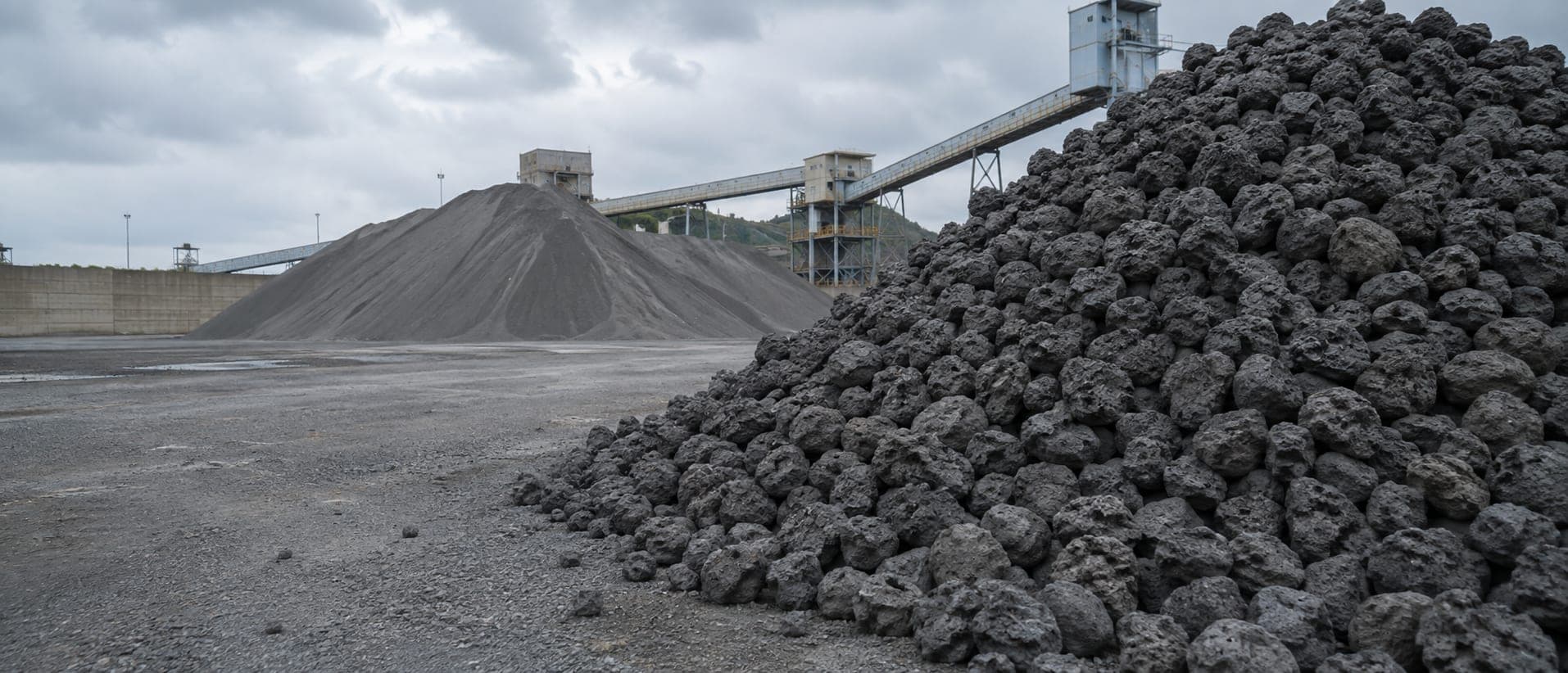
- Rapid cooling turns molten blast-furnace slag into a glassy granulate.
- Once ground, it acts as a latent hydraulic binder.
- Early strength is slower but strength continues to develop after 28 days.
- Replacing clinker reduces production-related carbon emissions.
During ironmaking, non-metallic components in the ore separate as molten slag. Slow cooling produces a crystalline material with little binding ability. Rapid water granulation preserves a glassy structure with latent hydraulic properties. GGBS is this material after fine grinding.
What does latent hydraulic mean?
Slag hardens very little when mixed with water on its own; it needs an alkaline environment. Calcium hydroxide released by cement hydration provides that activation, allowing slag to form additional binding phases. Consuming calcium hydroxide also improves resistance to chemical exposure.
Effects in concrete
- Lower heat of hydration and reduced thermal-cracking risk in thick sections.
- A refined pore structure that slows chloride and sulfate ingress.
- Reduced risk of alkali–silica reaction.
- Improved workability and pumpability of fresh concrete.
- A lighter colour in the hardened surface.
The early-strength trade-off
As slag content rises, strength develops more slowly during the first days. Formwork stripping must be planned accordingly. The slowdown becomes more pronounced in cold weather, so slag content and curing conditions should be reviewed together for winter pours.
Environmental benefit
Most cement-production emissions come from clinker: carbon dioxide is released chemically during limestone calcination and fuel is consumed in the kiln. Replacing clinker with slag reduces both sources and makes productive use of a by-product from another industry.
We supply ground granulated blast-furnace slag both as a separate product and within slag-cement families. The proportion should be selected against the project strength programme and seasonal conditions.
Frequently asked questions
Why is concrete made with slag lighter in colour?
Slag is lighter than clinker and contains fewer iron compounds. At high replacement levels the surface may look noticeably pale or slightly bluish. This is visual and does not indicate lower strength.
What slag proportion should be used?
It depends on the application. Higher levels suit mass concrete and durability-led work; lower levels suit fast formwork cycles and cold-weather pours. The programme and season must be assessed together.
Does slag change curing requirements?
Yes. Because slag reacts more slowly, keeping concrete moist for long enough is particularly important. Ending curing too early can reduce surface strength and durability.
Related pages
Previous posts

August 9, 2026
How should cement be stored, and how long is its shelf life?
Cement reacts with moisture in the air. Poorly stored bags can harden and lose performance, while correct dry storage preserves their properties for much longer.
August 8, 2026
Cold-weather concreting: what should be checked on site?
As temperature falls, hydration slows, strength is delayed and fresh concrete is exposed to freezing. Cement selection, placing temperature and insulated curing make the risk manageable.
August 6, 2026
When is sulfate-resistant cement required?
Dissolved sulfate in soil or water can react with phases in hardened concrete, causing expansion and cracking. Sulfate-resistant cement limits this risk.

Tell us your tonnage and delivery address — we reply the same day
Whether it is continuous supply, a one-off shipment or an export enquiry, our technical team works with you to define the right product and delivery plan.